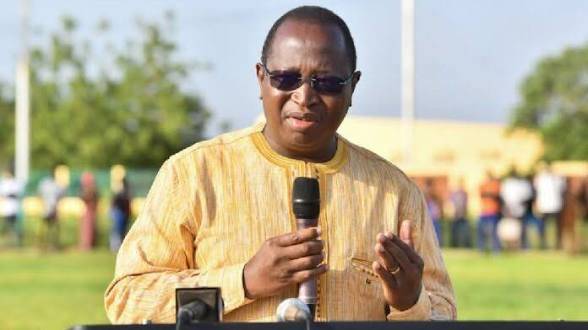
Burkina Faso’s government has once again demonstrated its rigid and authoritarian tendencies by publicly chastising young graduates from the diaspora. During a flag-raising ceremony at the Ministry of Higher Education, the Minister of Higher Education, Professor Adjima Thiombiano, launched a scathing verbal attack against these students. Their only offense? Expressing online reservations or criticism about the country’s educational system or daily realities. Rather than engaging in constructive dialogue or adopting a diplomatic approach, the minister resorted to threats, bluntly telling the youth, “If Burkina Faso doesn’t suit them, they should return to where they came from.”
Criticism treated as subversion: the rise of ideological persecution
The minister’s aggressive stance reveals a deeply entrenched intolerance for dissent within the current administration. Referring to these students as “misguided youth” and warning them that “they’ll meet every Burkinabè on their path” for daring to voice their opinions exposes a perilous mentality where dissent is equated with treason or sabotage. The government’s narrative now frames any critique of public policies as an act of infiltration, destabilization, or betrayal, rather than a legitimate contribution to national progress.
By normalizing suspicion as a governance tool, the Ministry of Higher Education is fostering a suffocating atmosphere of fear and self-censorship. When officials and educators are urged to “stand as a bulwark against behaviors bordering on rebellion,” the message is clear: universities must enforce ideological conformity, and critical students risk being labeled and ostracized.
Diaspora students: welcomed only if compliant?
The minister’s call for diaspora students to “return to where they came from” raises urgent questions about the very nature of citizenship in Burkina Faso today. Has nationality become conditional, reserved only for those who unquestioningly endorse the official narrative? By rejecting returnees or those educated abroad for expressing independent views, the government is driving a dangerous wedge between students at home and their peers abroad, undermining national cohesion.
Ironically, this same diaspora is often encouraged to leverage their international training to strengthen the nation. Yet now, they are effectively told they must abandon their critical perspectives to be accepted — a form of paternalistic control reminiscent of outdated ideologies.
The NEKRÉ Pact: A hollow vision for education reform
This exclusionary rhetoric is part of a broader initiative known as the “NEKRÉ Pact,” designed to reshape Burkina Faso’s education system from preschool to university. But how can educational reform be meaningful if it suppresses critical thinking and suppresses dissenting voices? Historically, universities have thrived as hubs of debate, intellectual curiosity, and academic freedom.
Instead of fostering vibrant academic exchange, the government appears determined to transform campuses into ideological fortresses where unquestioning loyalty overshadows intellectual inquiry. Such an approach turns the idea of an “educational renaissance” into a mockery. A system that fears its own students’ critiques betrays a lack of confidence in its own foundations. Under the guise of national pride and institutional preservation, the government is eroding academic freedom, stifling independent thought, and trampling on the very intellectual sanctuary universities were meant to be.